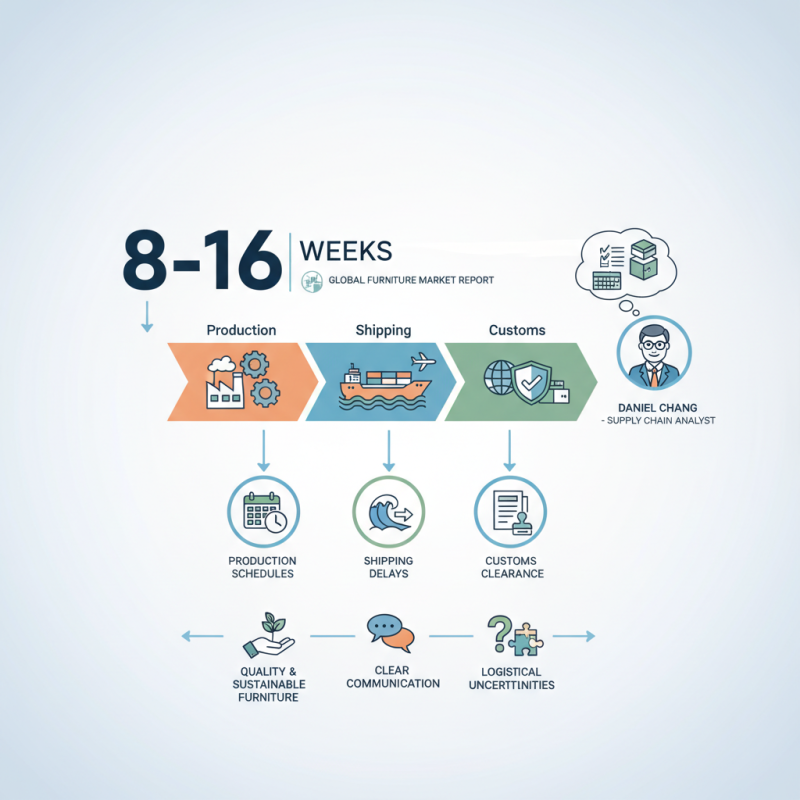
In the realm of educational institutions, understanding "what is the lead time for bulk school furniture orders from China" is crucial. A report from the Global Furniture Market estimates that lead times can vary widely, typically ranging from 8 to 16 weeks. Factors such as production schedules, shipping delays, and customs clearance can further complicate these timelines.
Expert Daniel Chang, a supply chain analyst at Global Education Furnishings, notes, “Understanding lead times is essential for school administrators to make timely decisions.” His insights highlight the importance of predicting and planning for these delays. In a world where schools strive to provide a conducive learning environment, having the right furniture on time is critical.
Additionally, the increasing demand for quality and sustainable furniture puts further pressure on manufacturers. Schools often face the challenge of balancing proactive purchasing with logistical uncertainties. This dynamic underscores the necessity of clear communication with suppliers. Navigating these complexities requires careful consideration and often, a willingness to adapt plans as circumstances evolve.
Understanding the lead time for bulk orders of school furniture is crucial for schools and educational institutions. Typically, lead times from manufacturers in China can range from 8 to 16 weeks. Factors like order size, manufacturing schedules, and shipping conditions all play a significant role in determining these times. Recent industry data suggests that disruptions in supply chains can extend lead times by up to 30%. This variability can create challenges for schools trying to align their furniture needs with academic schedules.
When planning a bulk order, consider production capacity at various facilities. Some manufacturers handle large orders more efficiently, while others may struggle, leading to delays. Shipping issues can also arise, particularly in peak seasons. It's wise to establish a solid communication line with suppliers. Frequent updates can help prepare for any unexpected changes in lead time.
**Tips:** Always order ahead, ideally several months before the academic year begins. This approach provides a buffer for unexpected delays. Additionally, consider diversifying your supplier base. Relying on multiple sources can mitigate risks and enhance reliability in meeting your furniture needs. Understanding these nuances can make a significant difference in managing expectations and ensuring timely delivery.
When considering bulk school furniture orders from China, several factors impact the lead time. The complexity of custom designs can significantly extend the manufacturing process. Reports indicate that custom orders can add an average of four to six weeks to the typical lead time. This highlights the necessity for clear communication of design specifications.
Another critical factor is the supply chain dynamics. Material shortages have been increasingly common, disrupting production schedules. According to the Global Manufacturer Survey, 70% of manufacturers reported delays due to supply chain issues in the past year. Such disruptions can lead to unpredictable lead times, often ranging from eight to twelve weeks for standard orders.
Logistics also play a vital role. Shipping delays caused by port congestion can prolong the delivery process. For instance, the average cargo waiting time at major ports has increased by 30% since last year. This can mean that even when production is completed on schedule, the final delivery may still be significantly delayed, resulting in potential challenges for schools expecting timely furniture arrivals.
When ordering bulk school furniture from China, knowing the lead times is crucial. Different types of school furniture come with various manufacturing and shipping timelines. For example, basic classroom desks and chairs typically have a lead time of about 30 to 60 days. More specialized items, like lab tables or adjustable furniture, can take 60 to 90 days.
It's important to plan ahead, especially for larger orders. Shipping methods can also influence delivery times. Air freight is faster but more expensive. Sea freight is cheaper but takes longer. Schools often underestimate these timeframes, which can lead to delays.
Tips: Always confirm production schedules with suppliers. Check for any potential delays during peak seasons. Communicating clearly and effectively can help ensure your furniture arrives on time. Also, consider placing orders well in advance to accommodate unexpected issues. This approach can save you time and frustration in the long run.
Lead time is crucial for bulk school furniture orders from China. It typically ranges from 8 to 16 weeks, depending on various factors. Delays can occur due to supply chain disruptions or production bottlenecks. Understanding these challenges is essential for schools seeking timely delivery.
To reduce lead time, schools can take several proactive steps. Firstly, accurate forecasting is vital. An analysis from the Global Supply Chain Institute suggests that precise demand forecasting can cut lead time by up to 30%. This involves closely monitoring enrollment trends and furniture needs. Secondly, maintaining open communication with suppliers is key. Frequent updates can help address potential delays early on. A study from McKinsey shows that effective communication can enhance efficiency by approximately 20%.
Additionally, schools might consider collaborative ordering. By joining forces with other institutions, they can increase order sizes and improve delivery schedules. This strategy not only lowers costs but can also lead to faster shipment times. As the furniture market fluctuates, flexibility becomes essential. Adapting to changes can minimize unexpected delays and ensure smoother transactions.
When managing lead time for bulk school furniture orders from China, it's crucial to focus on planning and coordination. Understanding the entire supply chain is vital. One must account for production times, shipping durations, and customs clearance. Each of these phases can significantly affect the overall timeline. Unexpected delays during any of these stages can cause frustration and impact school operations.
Establishing clear communication with suppliers is essential. Regular updates can help mitigate misunderstandings. It’s also wise to have contingency plans in place. Utilizing multiple suppliers can be an option, but it requires careful management. Sometimes, relationships with suppliers can yield better insights and flexibility, yet relying too heavily on one source can be risky.
Tracking orders using technology can enhance efficiency. There are tools available to monitor shipment progress. However, not every school may have access to such resources. Training staff to manage logistics is often overlooked. This investment in knowledge can lead to smoother operation during peak times. Adaptability is key. Each order presents unique challenges, so remaining flexible while following best practices is crucial for success.
: The lead time usually ranges from 8 to 16 weeks, depending on several factors.
Delays may occur due to supply chain disruptions or production bottlenecks.
Precise demand forecasting can cut lead time by up to 30%.
Open communication helps identify potential delays early and can enhance efficiency by about 20%.
Collaborative ordering involves joining forces with other institutions for larger orders, improving delivery schedules.
Technology can track shipment progress, but not all schools may have access to these tools.
Utilizing multiple suppliers can provide flexibility but requires careful management to avoid risks.
Training staff to manage logistics is often overlooked but can improve operations significantly.
Flexibility is essential as each order presents unique challenges and could minimize unexpected delays.
Effective planning and coordination can greatly influence the success of managing lead times for orders.
In exploring the topic of "what is the lead time for bulk school furniture orders from China," it is crucial to understand the various factors that can influence lead times. These may include manufacturing capabilities, order complexity, and shipping arrangements. Typically, lead times can vary for different types of school furniture, ranging from a few weeks to several months, depending on the specific items ordered and the supplier's processes.
To mitigate delays, customers can implement strategies such as placing orders in advance, maintaining clear communication with manufacturers, and optimizing shipping logistics. Adopting best practices for managing lead times in international orders can greatly enhance efficiency and ensure that schools receive their furniture on time, ultimately supporting their operational schedules.

Rimkok Furniture