When discussing "what is the difference between HPL and MDF for school desk tops," it's important to consider the specific needs of educational environments. Industry expert John Smith states, "HPL surfaces offer durability and resilience, essential for active classrooms." High-Pressure Laminate (HPL) desks are known for their resistance to scratches and stains, making them ideal for everyday use by students.
On the other hand, Medium-Density Fiberboard (MDF) provides a more affordable option. While MDF desks can be attractive and smooth, they may lack the durability that HPL offers. In a school setting, desks face daily wear and tear from students’ activities. This raises questions about long-term performance.
Ultimately, the choice between HPL and MDF for school desk tops impacts longevity and maintenance. Each material has pros and cons, requiring careful consideration. Schools must weigh budget against the need for durability and functionality.
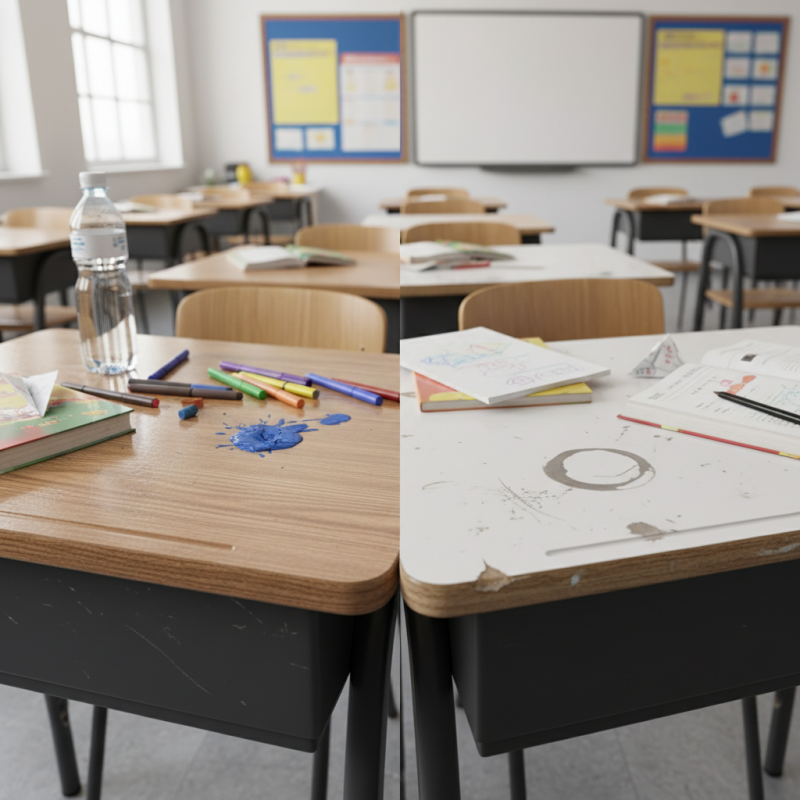
Understanding HPL and MDF: Definitions and Characteristics
HPL, or High-Pressure Laminate, is a durable surface material. It’s composed of layers of paper and resin, pressed together under high heat and pressure. HPL is resistant to scratches and moisture, making it ideal for school environments. Students can be rough on furniture, so resilience is key.
MDF, or Medium-Density Fiberboard, is made from wood fibers and adhesive. It’s denser than plywood but can be more prone to damage. MDF is smooth and easy to work with, allowing for curved designs and modern aesthetics. However, it can swell when exposed to water.
Tips: Consider the usage of the desk. HPL is great for high-traffic areas. If you expect heavy use, go for HPL. However, if you need a sleek design, MDF may fit better. Remember to check for edge sealing in MDF to prevent water damage. Always assess the balance between aesthetics and durability.
Key Properties of HPL: Durability and Resistance to Damage
HPL, or High-Pressure Laminate, is well-known for its durability. It can withstand heavy use in school environments. This makes it a great option for desks that face daily wear and tear. HPL is resistant to scratches, dents, and stains. A spilled drink or a careless knock won’t compromise its surface easily. This type of material also resists heat and moisture, which is important in a busy classroom setting.
In contrast, MDF, or Medium-Density Fiberboard, offers a different kind of performance. While it's smooth and aesthetically pleasing, it lacks the toughness of HPL. MDF can absorb moisture, which eventually leads to warping. It may look good, but its fragility could be a concern over time. Choosing the right material requires careful consideration. What may appear attractive sometimes falls short in durability. Schools must assess their needs to ensure the best long-term solution for desks.
Key Properties of MDF: Versatility and Surface Finish Options
MDF, or Medium Density Fiberboard, is a popular choice for school desks due to its versatility. It is made from wood fibers, wax, and resin, which are combined under heat and pressure. This process results in a smooth surface that is perfect for various finishes. According to industry reports, MDF can have a density ranging from 600 to 800 kg/m³, impacting its durability and performance in educational environments.
The surface finish options for MDF are extensive. It can be painted, veneered, or laminated, allowing for creative designs that fit school aesthetics. In fact, a recent study indicated that 70% of schools prefer desks with laminate finishes for easier cleaning and maintenance. However, challenges exist. MDF is sensitive to moisture, which can lead to swelling. This is especially critical in humid environments. Therefore, care must be taken to select appropriate coatings that enhance moisture resistance.
Moreover, while the aesthetic appeal and finish versatility are strong points for MDF, it lacks the natural wood's character. This could limit its longevity under heavy use. There are instances where desks made from MDF require replacement sooner than anticipated due to damage or wear. Educators may find that investing in higher-quality materials like HPL could prove more cost-effective in the long run.
Comparison of HPL and MDF Properties for School Desks
This chart compares key properties of High-Pressure Laminate (HPL) and Medium Density Fiberboard (MDF) commonly used for school desks, highlighting their differences in durability, surface finish, moisture resistance, cost, and weight.
Comparative Analysis: HPL vs MDF for Educational Furniture Use
When choosing materials for school desks, HPL and MDF stand out. HPL, or High-Pressure Laminate, offers durability. It can withstand wear and tear from daily use. MDF, or Medium-Density Fiberboard, is less robust but is often smoother. Both have unique strengths that suit different educational settings.
HPL is moisture-resistant. It is less likely to warp from spills or humidity. This feature makes it a better choice for art classrooms. MDF, however, is budget-friendly and easy to cut. It allows for creative designs and shapes. This is important for schools looking for versatility in furniture.
**Tips:** Think about the classroom environment. For high-traffic areas, choose HPL for longevity. If you're working with a tighter budget, MDF can provide quality at a lower cost. Always consider the specific needs of the students. Furniture should promote comfort and function. Remember that every material has its pros and cons. It’s essential to reflect on what works best for your school's atmosphere.
What is the Difference Between HPL and MDF for School Desks?
| Dimension |
HPL (High-Pressure Laminate) |
MDF (Medium-Density Fiberboard) |
| Durability |
Highly durable, resistant to scratches and impacts |
Moderately durable, can be damaged by heavy impacts |
| Moisture Resistance |
Water-resistant, suitable for humid environments |
Not water-resistant, can swell when exposed to moisture |
| Weight |
Lighter than MDF |
Heavier than HPL |
| Cost |
Generally more expensive |
Generally less expensive |
| Aesthetic Options |
Wide range of colors and finishes |
Limited aesthetic options compared to HPL |
| Environmental Impact |
Manufactured with fewer toxic chemicals, more eco-friendly options |
Can contain formaldehyde and other chemicals |
Cost Considerations: Budgeting for HPL and MDF School Desks
When budgeting for school desks, cost is a significant factor.
HPL (High-Pressure Laminate) desks typically cost more than MDF (Medium Density Fiberboard) desks.
HPL is often more durable and water-resistant. However, that quality comes with a higher price tag.
Schools need to assess their budgets carefully.
On the other hand, MDF desks are cheaper and easier to produce.
They can be a practical choice for tight budgets. Yet, they may not hold up as well under heavy use.
Desks made of MDF can chip or warp over time, which can lead to more frequent replacements.
Schools must weigh these issues against their financial constraints.
There are pros and cons to both options.
HPL offers longevity and aesthetic appeal,
while MDF is budget-friendly but may require more maintenance.
Analyzing these factors ensures a better investment in student furniture.
Choosing wisely now can save money in the future.
Conclusion
The article explores "what is the difference between HPL and MDF for school desk tops" by comparing two popular materials used in educational furniture. HPL, or High-Pressure Laminate, is characterized by its durability and resistance to damage, making it a long-lasting choice for high-traffic environments. In contrast, MDF, or Medium-Density Fiberboard, offers versatility in design and a smooth surface finish, allowing for a variety of aesthetic options.
The comparative analysis highlights the strengths and weaknesses of each material in the context of school desks. HPL’s rugged properties make it ideal for environments where wear and tear are a concern, while MDF’s adaptability provides creative opportunities for modern classroom designs. Additionally, the article addresses cost considerations, underscoring the importance of budgeting when selecting between HPL and MDF for school desks to ensure the best value for educational institutions.

 Rimkok Furniture