In the evolving landscape of education, the layout of school libraries plays a crucial role in promoting learning. Renowned library designer, Michael H. Brown, emphasizes, "A library should be a dynamic space that inspires creativity and collaboration." This highlights the importance of thoughtful design in school libraries.
Understanding how to design a modern school library layout requires attention to both functionality and aesthetics. Students need spaces to study, collaborate, and relax. A well-planned layout can cater to diverse needs, from quiet reading corners to interactive group areas. However, achieving this balance is not always straightforward.
Moreover, incorporating technology elements can enhance the user experience. Flexible seating and movable furniture are essential for adaptability. Yet, schools must reflect on their unique environments and student populations. This process requires careful consideration and sometimes, trial and error. Ultimately, designing an optimal school library layout is a nuanced endeavor that demands creativity and insight.
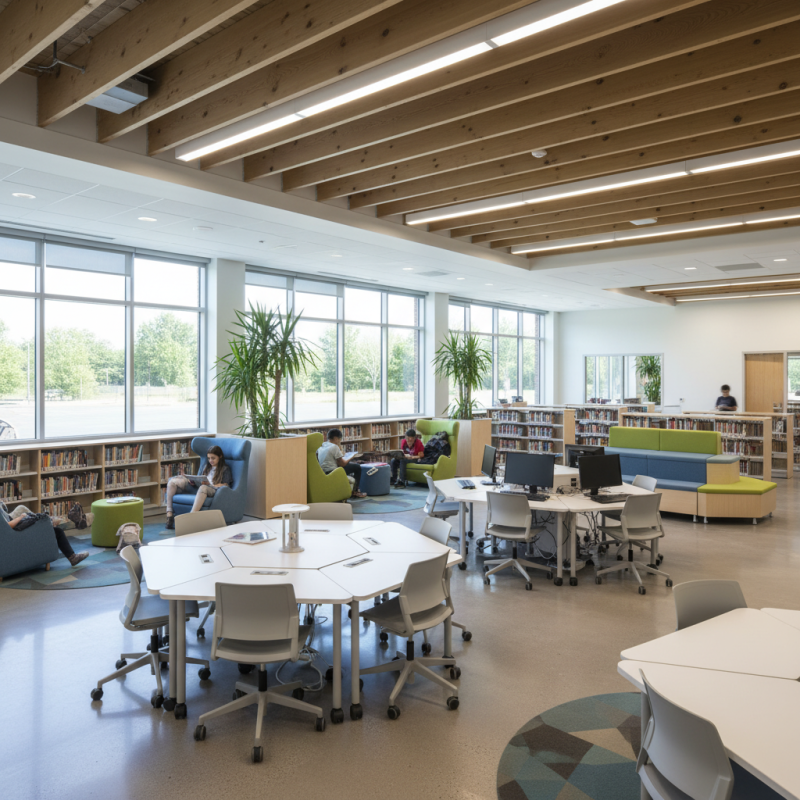
Understanding the Principles of Modern Library Design
The design of a modern school library significantly impacts student learning and engagement. A study by the American Association of School Librarians indicates that effective library layouts can enhance student performance by up to 50%. This underscores the importance of thoughtful design.
Flexibility is a core principle in modern library design. Spaces should accommodate various activities: quiet study, group work, and interactive learning. Incorporating movable furniture can transform a single space to fit different needs. Research shows that libraries with adaptable layouts report higher usage rates. It invites students to explore and interact with the space creatively.
Lighting and acoustics play vital roles in library atmosphere. Natural light can boost focus and mood. According to the International Well Building Institute, access to daylight can increase productivity by 15%. Acoustic treatments reduce noise and distractions, creating an inviting environment. However, many libraries still struggle with balancing these elements effectively. Regular feedback from users can identify areas for improvement. Adapting these designs to meet real student needs ensures the library remains a dynamic educational hub.
Key Elements for an Efficient School Library Layout
Designing a modern school library layout requires careful consideration of key elements that enhance efficiency. A well-structured layout can create a space conducive to learning and community engagement.
Consider flexible seating options. Movable furniture encourages collaboration and adaptation for various activities. This is crucial as it allows students to work alone or in groups easily. Areas should be designed for quiet study and group discussions. Balancing these environments can be challenging but is essential for an effective library.
Also, think about technology integration. Ensure that workstations have easy access to power sources. Charging stations should be available in multiple locations. Effective resource placement, such as books and digital materials, should facilitate smooth navigation.
Tip: Use signage that is clear and friendly. It should direct students easily to different sections. Another tip involves creating inviting spaces with natural light. More awareness of layout nuances can improve usability significantly, yet not every design will work for every school. Continuous feedback is vital for enhancing the library environment over time.
How to Design a Modern School Library Layout for Maximum Efficiency?
| Element |
Description |
Importance |
| Open Spaces |
Provides flexible areas for group work and collaboration. |
High |
| Study Zones |
Quiet areas dedicated to individual study and reading. |
Medium |
| Technology Stations |
Equipped areas for computer usage and digital resources. |
High |
| Flexible Furniture |
Modular furniture that can be rearranged for different activities. |
High |
| Resource Display |
Well-placed displays of books and materials to attract interest. |
Medium |
| Natural Lighting |
Utilization of windows and skylights to enhance the ambience. |
High |
| Color Schemes |
Use of calming colors to create an inviting atmosphere. |
Medium |
| Acoustic Treatment |
Sound-absorbing materials to minimize noise levels. |
High |
Creating Flexible Spaces for Collaborative Learning
Creating flexible spaces in school libraries is essential for fostering collaborative learning. When designing these areas, consider the diverse needs of students. A mix of quiet zones and open areas encourages group work and individual study alike. Use movable furniture to adapt the space as necessary. This allows students to form groups easily or spread out for focused work.
**Tips:** Incorporate writable walls for brainstorming sessions. Using these surfaces can inspire creativity and make collaboration more dynamic. Ensure technology is accessible, with charging stations and laptops available. This flexibility can enhance student engagement and promote teamwork.
Lighting also plays a crucial role. Blend natural light with adjustable artificial lighting to create a comfortable atmosphere. Students might feel more relaxed and focused in well-lit environments. However, be mindful of glare on screens and choose fixtures that can be adjusted easily. Reflections can hinder productivity, so invest time in selecting the right lighting arrangements.
Modern School Library Layout for Collaborative Learning
Incorporating Technology for Enhanced User Experience
Incorporating technology into a school library enhances user experience significantly. Digital resources like e-books, audiobooks, and interactive learning tools are essential. Students often seek immediate access to information. They may feel frustrated if they rely solely on traditional print resources. A diverse collection can alleviate this issue, creating a more engaging environment.
Flexible seating arrangements are crucial. Providing areas for group work and quiet study promotes collaboration and concentration. Adding charging stations and Wi-Fi access ensures that students can use their devices seamlessly. However, it’s essential to balance tech usage with traditional materials. Some students thrive on physical books and tangible resources, which technology cannot replace entirely.
Creating an inviting atmosphere also plays a key role. Integrating comfortable seating, natural lighting, and vibrant decor fosters a sense of belonging. Libraries should include spaces for creative projects and technology exploration. Yet, challenges remain. Not every student feels comfortable with technology. Offering workshops or one-on-one support can help bridge this gap, making sure no student falls behind.
Designing for Accessibility and Inclusivity in Libraries
Designing a modern school library must prioritize accessibility and inclusivity. Libraries should welcome all students, regardless of their needs. The layout should facilitate movement and access for everyone. This opens doors for a diverse student body.
Consider using flexible seating arrangements. Movable furniture can help accommodate various group sizes and personal preferences. Clear pathways must be established. Aim for at least three feet of clearance for wheelchairs. Shelving should be lower to ensure that materials are reachable for all.
Incorporating technology is essential. Offer adaptive tools and devices for students with disabilities. For example, screen readers or adjustable desks can transform the experience. Create quiet zones for studying and collaboration. Not every aspect of a library will be perfect. Gather feedback regularly to adapt the layout accordingly. Listening to users is vital for continuous improvement.
Conclusion
Designing a modern school library layout requires an understanding of contemporary library design principles that prioritize efficiency and user engagement. Key elements include creating flexible spaces that foster collaborative learning, thus accommodating different teaching methods and student needs. Additionally, incorporating technology is essential to enhance the user experience, enabling both students and teachers to access resources more effectively.
Accessibility and inclusivity are also crucial considerations in how to design a modern school library layout. A well-planned library should cater to diverse user groups, ensuring that all students, regardless of background or ability, can benefit from the resources available. By integrating these principles, schools can create inviting and functional library spaces that support educational goals and foster a love for learning.

 Rimkok Furniture