Choosing the right auditorium seating for small spaces requires careful consideration. Expert Angela Meadows, a renowned interior designer, emphasizes, "The right seats can transform a cramped space into a functional venue." Small spaces often present unique challenges.
Limited layouts require innovative solutions. Factors like seat size, arrangement, and comfort become crucial. You need to balance aesthetics with functionality. A well-chosen layout maximizes space without sacrificing comfort.
Think about the audience experience. Rows that are too tight can deter attendance. Remember, the goal is to create a welcoming environment. Sometimes, a seemingly perfect option may not work. Reflect on past choices. Different styles may better serve your needs.
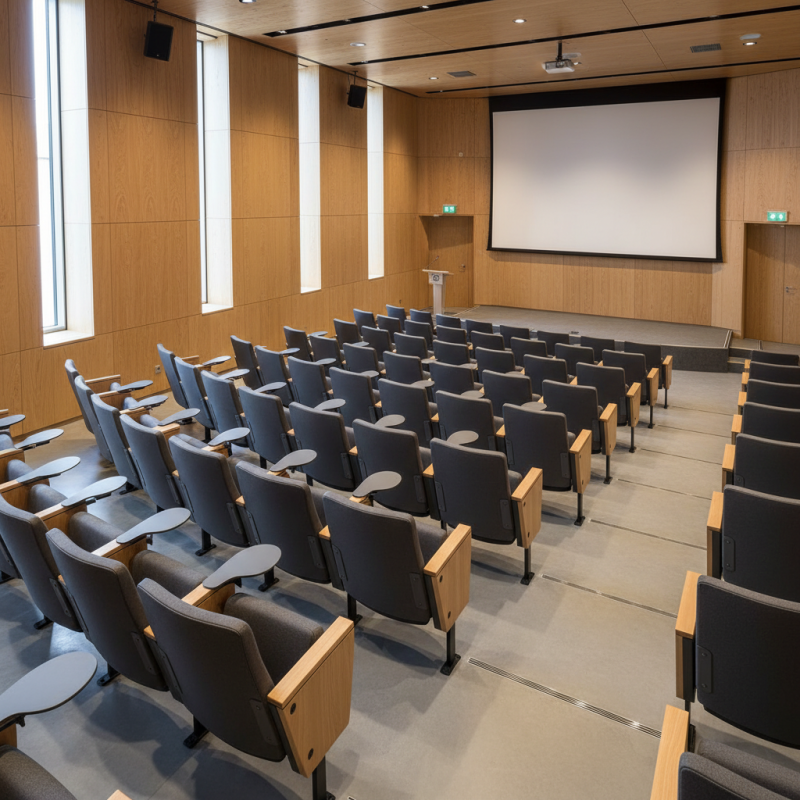
Choosing auditorium seating for small spaces requires thoughtful consideration. The right seating maximizes both comfort and functionality. Space constraints mean that every inch counts. Selecting seats that are both space-efficient and aesthetically pleasing should be a priority.
It's crucial to assess the layout of the space. Will the seating be fixed or movable? Fixed seating can save space but may limit flexibility. Movable seating offers adaptability but requires ample storage. Think about how people will flow through the space. Ensure aisles remain clear for easy movement.
**Tips:** Consider foldable or stackable chairs. They can provide extra seating when needed and save space when not in use. Look for seats that are compact yet comfortable. They should support prolonged sitting without sacrificing user experience. Even small spaces can be transformed into inviting environments with the right seat choice.
Choosing the right auditorium seating for small spaces involves understanding audience capacity and comfort requirements. A common mistake is overlooking individual comfort. Every attendee deserves sufficient space and support. Analyze the room dimensions to gauge how many seats will fit without compromising comfort.
Audience capacity matters. It directly impacts the overall experience. Consider the seating layout. Will it encourage interaction? Or will it isolate attendees? Rows may maximize space but can hinder communication. Circular or semi-circular layouts may foster a more inclusive atmosphere.
Think about additional comfort elements. Armrests, seat width, and legroom play crucial roles. Uncomfortable seating leads to distractions. Attendees may struggle to focus. Test out various seat designs before making a decision. It might reveal needs you hadn’t anticipated. Small adjustments can significantly enhance overall satisfaction.
When considering seating configurations in small auditoriums, the goal is to maximize space while ensuring comfort. Traditional rows may not be ideal. Instead, a semi-circular layout allows for better sightlines and engagement. This setup can make every seat feel closer to the stage. Arranging seats in clusters can also create a more intimate atmosphere. It encourages interaction and connection among attendees.
Another aspect to consider is the flexibility of seating. Movable chairs or benches can be effective. They enable quick reconfigurations for different events. However, this approach requires careful planning to ensure stability and safety. You might find that certain arrangements work for one event but not another. Testing different layouts can reveal unexpected challenges.
Lastly, remember the importance of accessibility. Make sure to include spaces for wheelchair users and consider the flow of movement. Compact designs often overlook these needs. It is essential to reflect on how each choice impacts audience experience. Balancing aesthetics and functionality can be tricky but is crucial in small spaces.
In small auditorium spaces, acoustics play a crucial role in audience experience. The arrangement of seating can greatly enhance sound quality. When choosing seating, consider how sound travels. Hard surfaces can cause echoes, while soft materials help absorb sound.
Proper positioning of seats is also vital. Seats should be placed to minimize sound distortion. Consider the listener's distance from the speaker. Additionally, different row heights can create a more even sound distribution. Observing existing layouts can reveal weaknesses and areas for improvement.
Natural light can conflict with acoustic quality. Large windows may lead to reflections that disrupt sound. Using curtains can help control this issue. It's important to evaluate how the space feels during events. Invite feedback from users to identify problems. This ongoing reflection leads to better choices in seating arrangements. The process is not always straightforward, and adjustments may be necessary over time.
When considering auditorium seating for small spaces, materials and durability play a critical role. Opting for robust materials ensures that the seats can endure heavy use. Upholstered seats with high-density foam offer comfort but need careful selection of fabric. Stain-resistant and easy-to-clean materials are vital for maintaining a professional appearance.
It’s important to think about the long-term impact of your choices. Plastic seats are lightweight and sturdy, but they may lack the warmth of fabric. Metal frames are durable, yet their design can feel cold in a small space. You might wonder if mixing materials could create a unique aesthetic while maintaining durability.
Reflect on the potential wear and tear. In high-traffic areas, consider how easy it is to replace damaged seats. Frequent maintenance can also reflect directly on the overall experience of attendees. Balancing aesthetics with practicality demands thoughtful planning, as every choice impacts functionality.
| Seat Type | Material | Durability (Years) | Comfort Rating (1-5) | Maintenance Level |
|---|---|---|---|---|
| Folding Chair | Steel Frame with Fabric | 5 | 3 | Low |
| Stackable Chair | Plastic with Metal Base | 7 | 4 | Minimal |
| Concert Seat | Wooden Seat with Upholstery | 10 | 5 | Medium |
| Theater Seat | Leatherette with Laminated Wood | 12 | 4 | High |
| Bench Seating | Metal with Cushioned Top | 8 | 3 | Medium |
: Audience capacity impacts the overall experience. It affects comfort and engagement levels.
Semi-circular or cluster layouts foster a more inclusive atmosphere, enhancing interaction.
Consider armrests, seat width, and legroom. Uncomfortable seating can distract attendees.
Test various seat designs. It can reveal comfort needs not initially anticipated.
Rows can hinder communication. They create isolation rather than encouraging interaction.
Movable chairs allow quick reconfigurations for different events, enhancing versatility.
Include wheelchair spaces and ensure smooth movement. Compact designs often overlook this.
Some arrangements may work for one event but pose challenges for another.
Overlooking individual comfort is a frequent error that can lead to dissatisfaction.
Minor tweaks in seating can significantly enhance overall comfort and experience.
When considering how to choose the right auditorium seating for small spaces, several key factors come into play. First, it's essential to understand the audience capacity and comfort requirements to ensure an optimal viewing experience. Evaluating different seating configurations is also crucial, as limited spaces often necessitate creative arrangements. Additionally, the importance of acoustics should not be overlooked; a well-designed seating layout can enhance sound quality, making the experience pleasant for all attendees.
Materials and durability are fundamental elements in this decision-making process. Selecting seats that are not only comfortable but also built to last will contribute to the longevity and functionality of the auditorium. By taking these considerations into account, one can effectively choose auditorium seating that maximizes space while ensuring an enjoyable environment for audiences.

Rimkok Furniture