In the world of metal furniture, welding quality is crucial. A report by the American Welding Society states that poor welding can reduce the lifespan of metal beds significantly. Checking the welding quality is not just a matter of aesthetics but also of safety and durability.
According to industry expert John Smith, "A well-welded bed frame ensures stability and prevents hazards." His insight underlines the importance of proper assessment. Knowing how to check the welding quality of metal beds can save users from potential accidents. Techniques like visual inspection and testing the strength of welds are essential standards in the industry.
Neglecting to verify these standards can lead to catastrophic failures. Some users mistakenly assume all metal beds are safe without proper checks. It's essential to address this oversight, ensuring that the welding quality is not just taken for granted but actively verified.
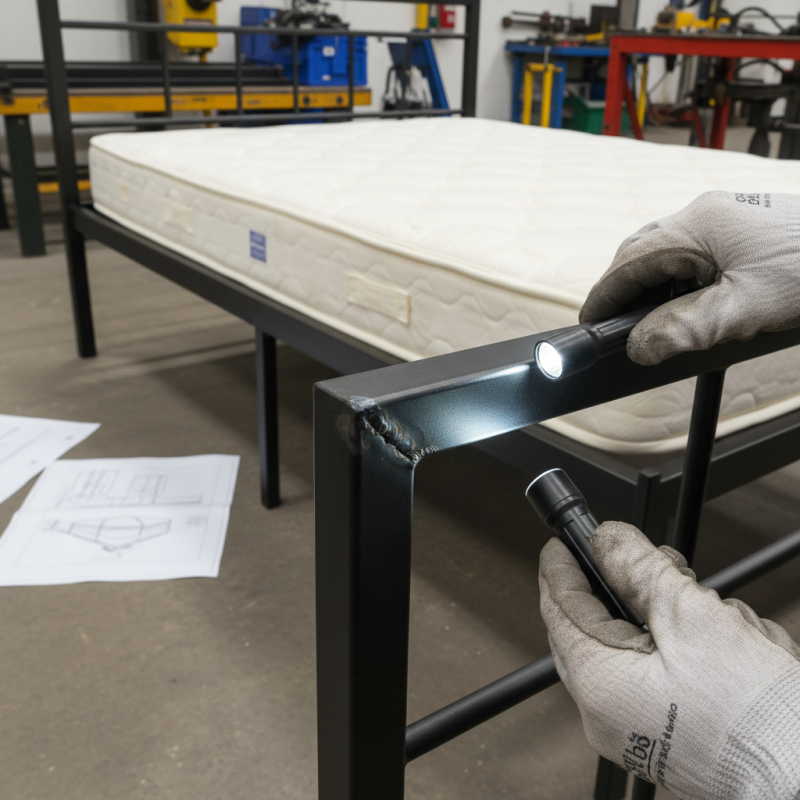
Welding quality plays a critical role in the manufacturing of metal beds. Research from industry experts shows that inadequate welding can lead to structural failures. A study reviewed by the American Welding Society found that 30% of metal furniture failures stem from poor welding practices.
Proper welding ensures that the joints can withstand load and stress. Metal beds are subjected to significant weight, often exceeding 1,000 pounds. An inferior weld could result in bed instability, causing potential injuries. Additionally, the longevity of metal beds diminishes significantly with poor welding. Reports indicate that beds with defective welds last up to 40% less time than those with high-quality welds.
Beyond safety concerns, manufacturers face financial repercussions. It costs an estimated $200 million annually to address failures related to poor welding in the furniture industry. Each defective bed incurs replacement costs and affects brand reputation. Regular inspections and adherence to strict welding standards can minimize these risks, contributing to overall product reliability.
Welding quality is vital in metal beds. Poor welding can lead to several defects that compromise structural integrity. Common faults include incomplete penetration, poor fusion, and excessive spatter. According to industry reports, around 30% of welded joints in metal structures exhibit these defects. This highlights the importance of thorough inspections.
Incomplete penetration occurs when weld metal does not reach the joint's base material. This defect can significantly weaken the bed frame. Poor fusion, on the other hand, is when the weld metal fails to bond properly with the base material. This kind of defect can cause bed instability. Excessive spatter can affect the bed's aesthetic and functional quality.
Tip: Always look for uniform welds. Irregular bead shapes can indicate potential issues.
Defects like these are often overlooked during manufacturing. Regular inspections should be a priority. Utilizing non-destructive testing methods can help identify weaknesses not visible to the naked eye.
Tip: Consider documenting inspection processes. Having a record can aid in quality assurance.
By understanding these common welding defects, consumers can make informed decisions. Prioritizing welding quality ensures safer, longer-lasting metal beds.
When assessing the welding quality of metal beds, several techniques can be employed. Visual inspection is a common and effective method. Look for uneven welds or gaps. These could indicate weak joints. A weld should appear smooth and uniform. Discoloration might also signal issues during the welding process.
Non-destructive testing (NDT) is another crucial technique. Methods like ultrasonic testing detect internal flaws without damaging the material. This approach requires specialized equipment and trained personnel. It provides deeper insights into the integrity of the welds. Moreover, it helps maintain safety standards, especially for heavy-use furniture.
Finally, destructive testing can provide conclusive results. This method involves breaking the weld to analyze its strength and quality. Although it removes the tested sample from use, it offers important data. Understanding these techniques shows the need for careful evaluation. Over time, even small flaws can compromise the strength of metal beds. Regular assessments ensure durability and safety for users.
| Welding Technique | Inspection Method | Quality Indicators | Recommended Frequency |
|---|---|---|---|
| Arc Welding | Visual Inspection | Uniform bead appearance, no cracks | Every 6 months |
| MIG Welding | Ultrasonic Testing | Internal discontinuities, soundness | Annually |
| TIG Welding | Dye Penetrant Inspection | Surface cracks, porosity | Every 3 months |
| Spot Welding | X-Ray Inspection | Weld penetration, consistency | Bi-annually |
| Submerged Arc Welding | Magnetic Particle Testing | Surface and near-surface flaws | Quarterly |
Welding quality directly impacts the durability of metal beds. Poor welding can lead to weak joints, which compromise the entire structure. A bed may look sturdy at first glance, but hidden flaws could lead to significant issues over time. For example, a weak weld may break under pressure. This can happen during regular use, such as when sitting or jumping on the bed.
Inadequate welding can also cause a bed to wobble. A wobbling bed not only affects comfort but can also be dangerous. Imagine resting after a long day, and the bed unexpectedly shifts. It might seem like something minor. However, it's a clear sign of poor craftsmanship. Inspecting welds can prevent these problems. Visual checks can reveal inconsistencies, while extra tactile assessments can help gauge strength. It takes only a little effort to ensure safety and comfort in the long term.
When considering a metal bed, the welding quality is crucial. A well-welded frame ensures strength and durability. Poorly welded beds can lead to structural failure over time. Checking welding quality gives you peace of mind. It is essential for your safety and investment.
Choosing a reliable metal bed manufacturer is vital. First, look for a company with years of experience. They should have a proven track record in the industry. A manufacturer with expertise understands the importance of quality. This knowledge often reflects in their products.
Secondly, ask for reviews and testimonials. Previous customers can provide insight into their experiences. Look for consistent feedback about welding and overall quality. A reputable manufacturer will showcase their successful projects. If there are complaints, consider them carefully. A single bad review may not be significant, but patterns should raise flags.
Lastly, request samples or visit the factory if possible. Inspect the welds closely. Look for clean, even seams. This tells you a lot about their production standards. Trust your instincts—if something feels off, it might be. Your bed should be a dependable foundation for restful nights.
: Welding quality is critical because poor welding can cause structural failures in metal beds.
Common defects include incomplete penetration, poor fusion, and excessive spatter, which weaken the bed’s structure.
Beds with defective welds might last 40% less time compared to those with high-quality welds.
Inadequate welding leads to around $200 million in annual costs for the furniture industry due to defects.
Look for a manufacturer with years of experience and positive customer reviews regarding welding quality.
Check for uniform welds and clean, even seams. Document inspection processes for quality assurance.
Be cautious of irregular bead shapes; they can indicate potential issues. Trust your instincts during evaluation.
Poorly welded beds can become unstable under significant weight, leading to injuries.
Regular inspections identify defects, helping improve quality and safety standards over time.
This can reflect their commitment to quality and reassure consumers regarding their welding practices.
When purchasing a metal bed, ensuring the welding quality is crucial for safety and durability. Understanding how to check the welding quality of metal beds involves recognizing the importance of proper welding techniques and being aware of common defects such as weak joints or inadequate penetration. These issues can significantly impact the bed's longevity and structural integrity, leading to potential hazards for users.
To effectively assess welding quality, one can employ various techniques, such as visual inspections, checking for even weld beads, and utilizing non-destructive testing methods. Additionally, selecting a reliable metal bed manufacturer is essential, as reputable companies are more likely to adhere to high standards in their manufacturing processes. By prioritizing welding quality, consumers can ensure they invest in a metal bed that offers both comfort and durability.
Rimkok Furniture