In 2026, flexible seating is becoming a practical option for classrooms seeking more ways to support focus, collaboration, and student choice. Instead of rows of identical desks, a room might include sturdy stools, soft floor cushions, standing tables, and a quiet corner with a small desk. The goal is not to make every lesson feel casual. It is to give students seating choices that suit different tasks and needs.
So, why schools are switching to flexible seating arrangements is not simply a matter of following a trend. Teachers may find that movable furniture makes group work easier, while a quiet spot can help some students settle into independent reading. But the results depend on thoughtful planning, clear routines, and furniture that fits students’ ages and physical needs. A wobbling stool or crowded walkway can distract more than it helps.
Choice matters. So does structure. Schools considering a change should look at classroom size, accessibility, supervision, storage, and how students will share popular seats. Teachers’ observations can help identify what works, but one classroom’s experience will not guarantee the same outcome elsewhere. There is also a fair question: do flexible seats improve learning, or do they simply make a room feel different? The honest answer may vary by class. This guide explores leading flexible seating options for 2026, the reasons schools are adopting them, and the practical trade-offs educators should weigh before rearranging a single desk.
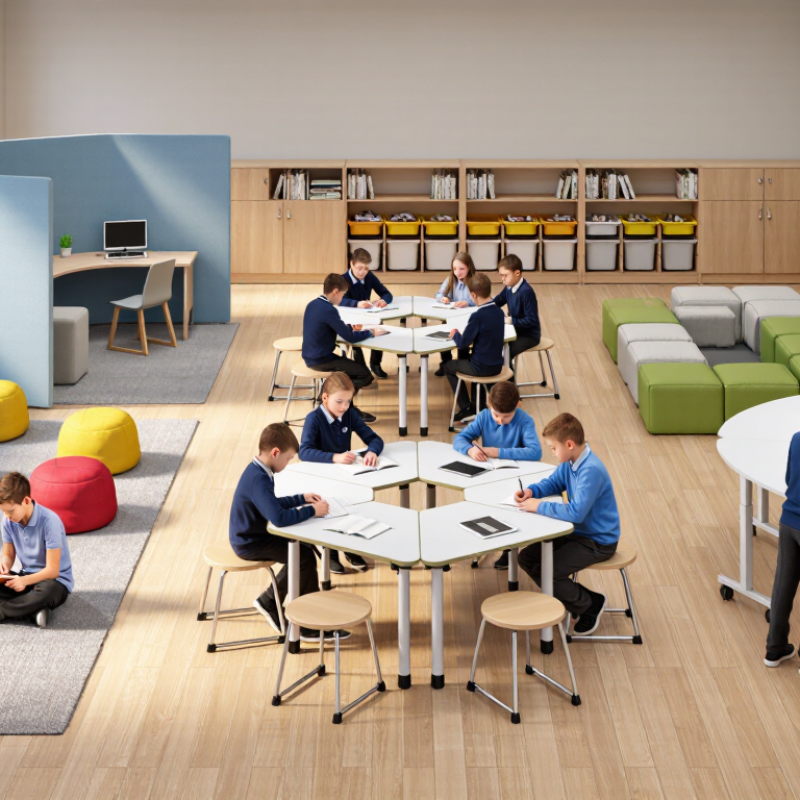
2026 Best Flexible Seating: What Flexible Seating Means in K–12 Classrooms
Flexible seating means giving students a few purposeful places to work, rather than assigning every learner one fixed chair. A classroom might include standard desks, wobble stools, floor cushions, and a standing station. Students choose a spot that suits the task, then return materials and keep walkways clear. The goal is thoughtful choice, not furniture for its own sake. A fifth grader may focus better while standing; another may need a firm chair and quiet corner. Some choices will miss the mark.
Evidence supports careful classroom design, but not every seating option has been proven to improve learning. The University of Salford’s 2015 HEAD project studied 153 classrooms and 3,766 pupils. It linked classroom design factors overall to 16% of the variation in academic progress—not flexible seating alone. The CDC’s review of school-based physical activity also found generally neutral or positive academic outcomes. That is useful context, not a promise that a new stool raises test scores.
Tips: Start with a small trial. Teach students how to choose, move, and reset each seat. Watch for blocked paths, noise, and students who keep switching. Ask learners which spots help them concentrate, then adjust. Keep enough conventional seating; choice should not become pressure to perform while moving.
What flexible seating means in K–12 classrooms: giving students options for where and how they work, as part of a more adaptable learning environment.
What the chart shows: In the HEAD Project, classroom-design factors associated with learning progress were grouped into naturalness (50%), individualization (25%), and stimulation (25%). Flexible seating relates most closely to individualization, which includes flexibility and student ownership; the study did not measure flexible seating alone.
The study found that classroom design explained 16% of the variation in pupils’ learning progress. These percentages describe the relative contribution of the three design principles—not student achievement gains or a causal effect of flexible seating. Source: Barrett et al., “The impact of classroom design on pupils’ learning,” Building and Environment, 2015.
In 2026, flexible seating usually means offering a few purposeful choices, not replacing every desk. Schools may combine adjustable-height desks, lightweight tables, and mobile chairs that can be rearranged for group work. Some classrooms add floor cushions or soft seats for quiet reading, while wobble stools give students another way to move during lessons. Options should match the room, students’ needs, and the activities planned.
A mix works better than a free-for-all. Teachers can set clear routines for choosing seats, moving furniture, and keeping walkways open. Check that tables adjust securely and that soft seating can be cleaned easily. Students who need firm, stable seating should have it available without having to ask each day. The layout will not feel perfect every day. Noise and transitions can take practice, and some choices may need reconsidering.
Tips: Start with one zone, such as a standing table or reading corner. Observe whether students stay focused and can see instruction clearly. Ask for feedback, then adjust the setup. Keep a few standard chairs nearby; choice matters, but so does comfort.
Rows of identical desks can make a room orderly, but they may not suit every lesson. A group discussion, quiet reading, and hands-on project each ask students to work differently. Flexible seating gives teachers options, such as movable chairs, shared tables, and standing workspaces. The point is not constant movement. It is matching the space to the task.
Research supports thoughtful classroom design, not a claim that flexible seating alone raises grades. The HEAD study, published in Building and Environment, examined 153 classrooms and 3,766 pupils. It found classroom design features were associated with 16% of the variation in students’ academic progress. Individualization, including opportunities for choice and flexibility, was one factor assessed. That is meaningful, but it does not prove that changing desks by itself causes better learning.
In practice, teachers may begin with a few movable seats and clear routines. A student might choose a quiet corner for independent work, then join a table for peer review. Small changes count. There are trade-offs: too many choices can distract, and some students need predictable places. Schools should observe participation, comfort, and access over time, then adjust the layout. The evidence is promising, but local results may differ.
Flexible seating gives students more than one way to work: a standard chair for writing, a standing spot for a quick task, or a quiet corner for focused reading. In the University of Salford’s 2015 HEAD project, researchers studied 153 classrooms and 3,766 pupils. Classroom design was associated with 16% of the variation in pupils’ learning progress. That finding covers several design features, not seating alone, so it should not be read as a promise of higher scores.
Access matters. The National Center for Education Statistics reported that about 7.3 million students ages 3–21 received services under the Individuals with Disabilities Education Act in 2021–22, roughly 15% of public-school enrollment. Flexible layouts can make room for mobility devices, reduce crowding, and offer students different ways to manage sensory needs. A clear route between desks can matter as much as a new chair.
Comfort needs observation. A supportive seat and a desk at the right height can help students stay with a task; a wobbly stool may distract someone else. Choice helps. Teachers can offer a small set of options, then check who uses them and who still feels left out. The setup will not be perfect on day one. That is worth noticing.
Schools should select flexible seating around learning needs, not appearance. Start by observing how students work during reading, group projects, and quiet tasks. Note who needs movement, who gets distracted by noise, and where mobility or sensory needs affect comfort. Ask students and support staff for specific feedback. A small pilot helps. Try a few seat types in one classroom before changing an entire school. Include stable chairs, floor cushions, and adjustable options, while keeping clear paths to exits and learning materials.
Check construction, cleanability, repair needs, and storage before purchasing. A fabric seat may feel inviting, but can be harder to keep clean after spills. Set simple routines for choosing seats, returning them, and switching when a spot no longer supports learning. Keep familiar seating available; flexibility should not become a requirement. Watch for practical signs over several weeks, such as time spent settling, participation, and teacher observations. Ask students what helps them focus, rather than assuming a popular seat works for everyone. The first arrangement may fail. That is useful information, not proof that the idea is wrong. Adjust one factor at a time, and record why changes are made. Novelty can briefly improve engagement, while wobble seats may distract some learners. Review the evidence with teachers and students before expanding.
| Decision Area | What Schools Consider | Practical Options or Measures | Selection and Introduction Guidance |
|---|---|---|---|
| Why switch? | A single desk-and-chair arrangement may not suit every task, learner, or classroom activity. | Provide a mix of individual workspaces, shared tables, and a limited number of alternative seats. | Define the classroom need first—such as more choice, easier group work, or better use of available space—rather than replacing furniture for its own sake. |
| Learning activities | Different lessons call for different levels of interaction, quiet, and movement. | Consider quiet individual spots, collaboration tables, floor-level work areas, and conventional desks or chairs. | Map furniture choices to actual activities. Keep enough conventional seating for students who prefer or need it. |
| Comfort and fit | Students vary in height, mobility, sensory preferences, and ability to use particular seating safely. | Offer adjustable or age-appropriate seating, supportive chairs, and accessible work surfaces where needed. | Check seat height, desk height, stability, posture, and ease of entry and exit. Consult students, families, and relevant support staff when appropriate. |
| Movement options | Some learners benefit from having appropriate opportunities to change position during work. | Possible choices include standing-height work surfaces, stools, or seats that permit small movements, alongside stable seating. | Treat movement-oriented seating as an option, not a requirement or a guaranteed way to improve attention. Set clear expectations for safe use. |
| Room layout and access | Furniture must support clear circulation, supervision, and access to classroom materials. | Plan stable pathways, accessible routes, teacher sightlines, and space for bags and learning resources. | Arrange a floor plan before purchasing. Check local accessibility, fire-safety, and building requirements. |
| Durability and upkeep | Daily classroom use requires furniture that can be cleaned, moved, and maintained appropriately. | Review cleanability, weight, replaceable parts, storage needs, and applicable safety information. | Compare total ownership needs—not just purchase price—including delivery, storage, maintenance, and replacement. |
| Budget and purchasing | Costs vary with furniture type, quantity, materials, shipping, and local purchasing arrangements. | Create a room inventory, identify reusable furniture, and compare like-for-like quotes. | Start with a small, balanced set of choices. Avoid buying a full-room package until the layout and student needs have been tested. |
| Student choice and routines | Choice works best when students understand how to select, share, and care for spaces. | Teach routines for choosing a spot, changing seats, returning furniture, and keeping walkways clear. | Introduce expectations explicitly. Review whether each student can access a suitable option during the activities that matter. |
| Suggested pilot | A small trial can reveal practical issues before wider adoption. | Try a limited selection in one classroom or learning area for a planned period, such as four to six weeks. | Before and during the pilot, note student access, transitions, furniture use, maintenance needs, and teacher observations. Treat findings as local evidence, not a universal result. |
| Review and refine | The layout may need adjustment as routines, class composition, or learning activities change. | Gather brief feedback from students and staff; record which spaces are used and any access or safety concerns. | Keep options that meet the stated goals, modify those that do not, and schedule periodic checks for fit, condition, and classroom access. |
Planning note: The pilot duration and measures above are suggested planning tools, not guaranteed outcomes. Schools should adapt them to local needs, policies, and available evidence.
Students choose from a few purposeful work spots instead of using one assigned chair. Options might include desks, floor cushions, or a standing station.
No. Research links classroom design overall with learning progress, but does not prove that flexible seating alone raises scores. Useful context, not a guarantee.
A classroom might have firm chairs for writing, a standing spot for short tasks, and a quiet corner for reading. Keep the choices manageable.
Start with a small trial. Show students how to choose a spot, move safely, and return materials before leaving.
Watch whether students stay focused, keep switching, or distract nearby classmates. Ask which spots help them concentrate. Some answers may surprise you.
Clear routes can make room for mobility devices and reduce crowding. Different spots may also help students manage sensory needs.
No. Keep enough conventional chairs for students who prefer them. Choice should not feel like pressure to move.
Blocked walkways, extra noise, and frequent seat changes can disrupt work. The setup may feel awkward at first; adjust it as you observe.
Flexible seating in K–12 classrooms gives students more choice in where and how they work, using options such as movable chairs, floor cushions, standing desks, and shared tables. Rather than assigning every student a permanent place at a fixed desk, teachers can arrange spaces for individual tasks, small-group activities, or whole-class learning. The goal is to make the classroom adaptable while keeping routines and expectations clear.
The question of why schools are switching to flexible seating arrangements reflects a broader interest in supporting student comfort, focus, collaboration, and inclusion. Different seating options may suit different activities and preferences, giving students practical ways to participate in learning. Successful implementation takes planning: schools should consider classroom size, accessibility, safety, budgets, and students’ needs, then introduce the setup gradually. With clear guidelines and regular feedback, teachers can adjust the space and help students use their choices responsibly.

Rimkok Furniture